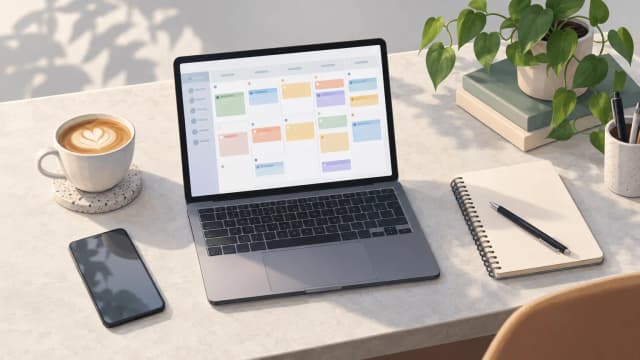
Most small business owners write a blog post, hit publish, share it once, and then move on. That's a painful waste of the effort they just put in. A solid blog post isn't a one-time asset — it's a raw material. With the right approach, a single article can fuel your entire week of marketing without you sitting down to write anything new. That's the core idea behind content repurposing, and once you start doing it intentionally, you'll wonder why you ever did anything else.
This isn't about being lazy or cutting corners. It's about being smart with your time and consistent with your message. The businesses that show up everywhere — Instagram, email, LinkedIn, search — aren't necessarily creating more. They're just reusing better.
Why one blog post is worth more than you think
A well-written blog post typically contains several distinct ideas, a handful of useful examples, a few quotable lines, and at least one strong argument or framework. Each of those elements is a standalone piece of content waiting to happen. The problem is most people only ever see the blog post as a single unit — something to be published and forgotten.
Think about what's actually inside a 1,000-word post. There's an opening hook. There are probably three or four supporting points. There might be a stat or a comparison. There's a conclusion with a takeaway. That structure maps almost perfectly onto a week's worth of social media posts, an email newsletter, a short video script, and even a quote graphic. You've already done the thinking. The repurposing step is just translation.
This is also why the quality of your original post matters. A shallow, generic article won't have much to extract. But a post that actually says something — one with a real perspective and specific advice — gives you rich material to work with across every channel.
How to break a single post into a week of content
Here's a practical framework you can apply to almost any blog post. It doesn't require any special tools, just a shift in how you look at what you've already written.
Monday — the original post. Publish and share the full article. Write a short intro for LinkedIn or wherever your audience hangs out. Keep it conversational and link back to the post. This is your anchor piece for the week.
Tuesday — a key takeaway as a social post. Pull one of the main points from the article and write it as a standalone tip. Don't just copy-paste a sentence — reframe it slightly for the platform. On Instagram or Twitter, a tight two-to-four sentence tip with a clear point performs well on its own, even if the reader never clicks through to the full post.
Wednesday — an email to your list. Your email audience is different from your social audience. They opted in because they trust you. Send them a more personal take on the blog post's core idea. Reference the full article, but add a line or two that's just for them. This is also a great place to ask a question and invite replies.
Thursday — a quote or visual. Pull a strong sentence from the post and turn it into a simple graphic. Tools like Canva make this fast. It doesn't need to be fancy — clean, readable, and on-brand is enough. This kind of post tends to get saved and shared, extending your reach without any extra writing.
Friday — a short video or audio clip. Record a two-to-three minute video where you talk through the main idea from the post. You don't need a script — just use the blog post as your outline. Speak to the camera like you're explaining it to a client. Reels, TikTok, YouTube Shorts, or even a LinkedIn video all work here. This format reaches people who don't read long-form content.
By the end of the week, you've shown up on multiple platforms in multiple formats, all from one piece of writing. That's the real power of learning to repurpose blog content effectively.
The biggest mistake people make when they recycle content
The most common error is copy-pasting without adapting. Dropping the same caption across every platform, or republishing the same paragraph word-for-word in your email newsletter, feels lazy — because it is. Each channel has its own rhythm, its own tone, and its own audience expectations. People follow you in multiple places, and they'll notice when you're just broadcasting the same message with no thought for where they're actually reading it.
The fix is simple: keep the idea the same, but change the format and the framing. A LinkedIn post can be a bit longer and more reflective. A tweet needs to get to the point immediately. An email can be warmer and more direct. Same core message, different delivery. That's the difference between recycled content that feels stale and repurposed content that genuinely serves your audience.
Another mistake is waiting too long. Repurposing works best when it's baked into your process from the start, not treated as something you do weeks later when a post has already gone cold. Plan your repurposing at the same time you write the original post.
How to make this repeatable without burning out
The reason most people don't repurpose consistently is that it still feels like extra work. The solution is to build a simple system and, where possible, use tools that do the heavy lifting. See how AI content automation works to understand how platforms like Blost can help you turn a blog post into ready-to-use social captions, email drafts, and more — automatically.
Once you have a repeatable process, the volume of content you can produce from a single source becomes genuinely impressive. And if you're ready to put that system in place, getting started takes just a few minutes.
You don't need to write more. You need to use what you write better. Start with your last blog post, apply this framework, and see what a week of consistent content actually looks like when it doesn't require seven separate creative efforts to produce it.