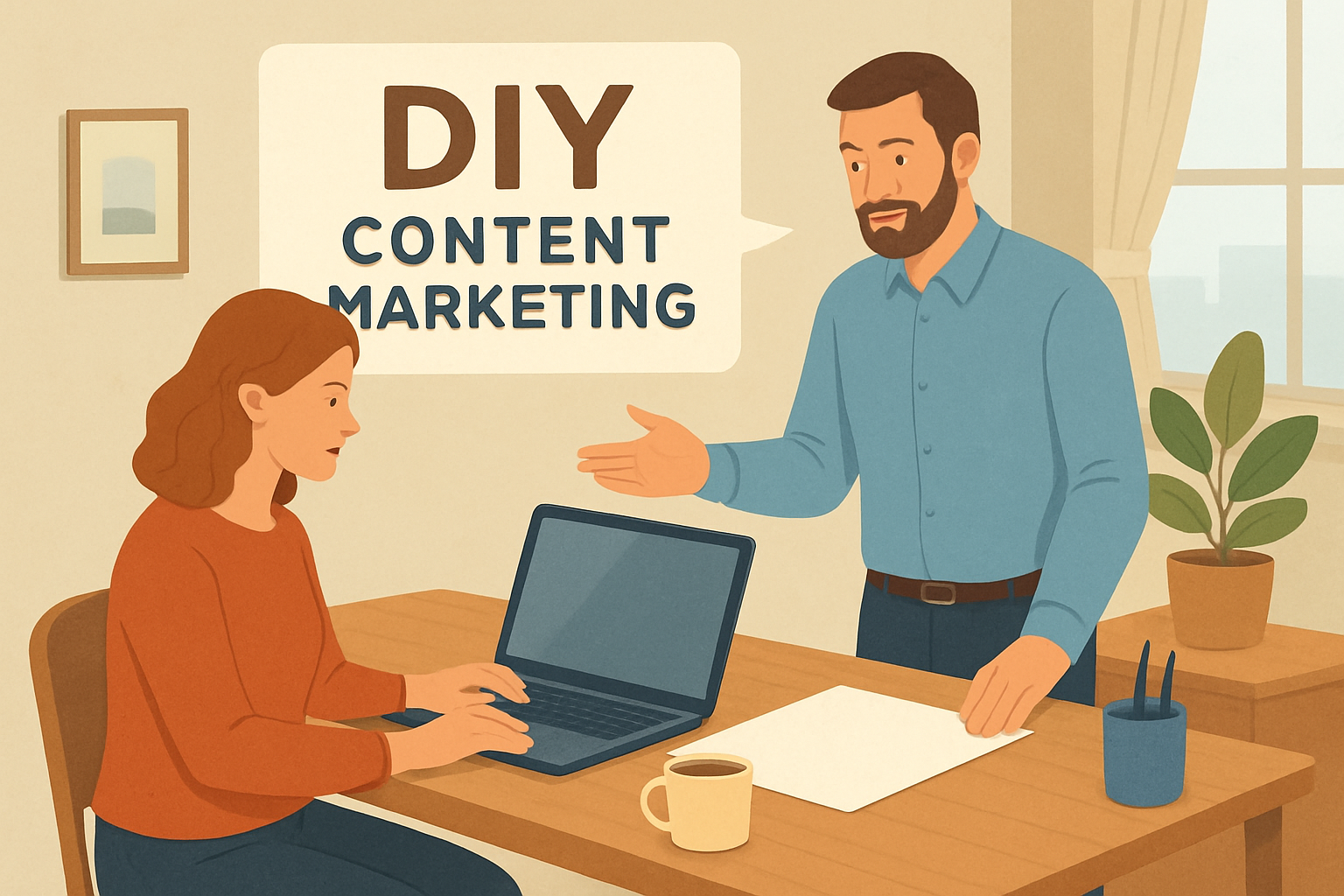
There was a time when hiring a content agency felt like the only real option. You needed writers, editors, strategists, SEO specialists, and someone to keep it all on a schedule. For most small businesses, that meant either stretching the budget thin or falling behind on content entirely. But something has shifted in 2026, and it has shifted significantly. content marketing without agency support is no longer a compromise — for many website owners, it is actually the smarter move.
This is not about cutting corners. It is about recognizing that the tools available today can genuinely replace what an agency does, step by step, without sacrificing quality or consistency. If you have been paying for a content retainer and quietly wondering whether you are getting full value, this article is worth reading slowly.
What agencies actually do (and why it felt irreplaceable)
Content agencies earn their fees by handling a specific set of tasks that most business owners either do not have time for or do not feel confident doing themselves. That includes keyword research, topic planning, briefing writers, editing drafts, optimizing for search engines, and making sure something actually goes live on a reliable schedule. When you break it down like that, it sounds like a lot — and it is. That is exactly why the model worked for so long.
But most of those tasks are not creative in the way that, say, designing a logo is creative. They follow repeatable processes. They rely on patterns, data, and structured thinking. And that means they are exactly the kind of tasks that modern AI tools are built to handle. The gap between what an agency does and what you can now do yourself has never been smaller, and for many businesses, it has essentially closed.
The specific tasks you can now handle on your own
Let us get specific, because the details matter here. A typical content agency workflow involves several distinct stages, and each one has a DIY content marketing equivalent in 2026.
Keyword research and topic planning used to require a strategist with access to expensive tools and enough industry knowledge to make sense of the data. Now, AI platforms can analyze your website, your niche, and your competitors and suggest a month's worth of topics in minutes. You still make the final call — you know your customers better than any agency does — but the groundwork is done for you.
Writing is the task most people assume still requires a human expert, and in some ways it does. But the definition of that expert has changed. The best AI writing tools in 2026 do not produce generic filler. They produce structured, well-researched drafts that you can review, adjust slightly, and publish with confidence. The editorial judgment is still yours. The hours of staring at a blank page are not.
SEO optimization is another area where agencies charged a premium simply because it required specialized knowledge. Meta descriptions, title tags, internal linking, heading structure — these feel technical, but they are also highly systematic. Tools built around this kind of optimization can handle it automatically, flagging what needs attention and often fixing it without you needing to understand every detail of how Google's algorithm works.
Finally, there is publishing and scheduling. Agencies maintained editorial calendars and made sure content went live consistently. Consistency is genuinely important for SEO. Missing weeks hurts you. But keeping a calendar does not require a team. It requires a system, and systems are exactly what automation is for.
Why small businesses are the biggest winners here
Large companies with complex content needs and multiple product lines may still benefit from agency relationships. But for the typical small business or independent website owner, the agency model was always a bit awkward. You were paying for a team that was also serving dozens of other clients. Your account manager was stretched. The writing sometimes missed the mark on tone because the writer did not really know your business.
When you replace content agency costs with a tool that learns your brand voice and works specifically on your site, you are not just saving money. You are often getting a better result. The content sounds more like you. It stays on topic. It does not require three rounds of feedback before it is usable.
If you are curious about what this kind of workflow actually looks like in practice, see how Blost approaches the full content process from topic generation through to a published post. It is a useful illustration of how each agency function maps to an automated equivalent.
The cost difference is also worth stating plainly. A mid-range content agency retainer in 2026 typically runs anywhere from $1,500 to $5,000 per month depending on output volume and the agency's positioning. DIY content marketing through an AI platform tends to cost a fraction of that — often less than the price of a single agency blog post — while delivering more content, more consistently. Compare what that looks like in real numbers and the math is difficult to argue with.
What you still need to bring yourself
Automation does not mean zero involvement. You still need to understand your audience. You still need to review what gets published and make sure it represents your business accurately. The strategic judgment — what matters to your customers, what sets you apart, what tone fits your brand — that comes from you. Good tools make space for that judgment rather than overriding it.
Think of it less like replacing your thinking and more like removing the administrative burden that was surrounding it. The actual value you bring to content — your expertise, your perspective, your knowledge of what your customers are searching for — stays intact. Everything else gets handled.
If you are ready to see what that looks like for your own site, getting started takes about five minutes. There is no long onboarding process, no agency pitch meeting, and no waiting two weeks for your first piece of content. You set it up, review what it produces, and start publishing. That is the whole point — content that works, on your timeline, without needing anyone else to make it happen.